33. Garden of the Provinces and Territories
Construction: 1961-1962
Architect: Donald W. Graham, Landscape Architect | Construction: J.P. Morin Ltd.
Location: Wellington Street west of Bay Street, Ottawa | Bounded by Wellington Street to the north and west, Bay Street to the east, Sparks Street to the south
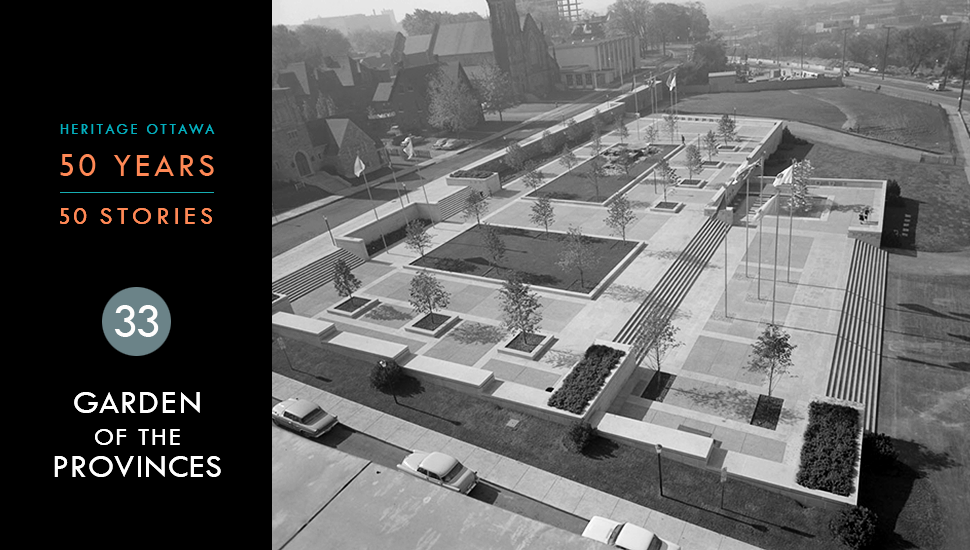
The Garden of the Provinces and Territories is one of Canada’s foremost Modernist landscapes. Proposed in the Gréber Plan of 1950 and designed in 1960 by landscape architect Donald W. Graham (1930-2017), the Garden of the Provinces was created to celebrate the provinces of Confederation in anticipation of Canada's centennial year. In 2005, it became known as the Garden of the Provinces and Territories.
Construction began in early October of 1961. The Garden was officially opened by Prime Minister John Diefenbaker on September 25, 1962.
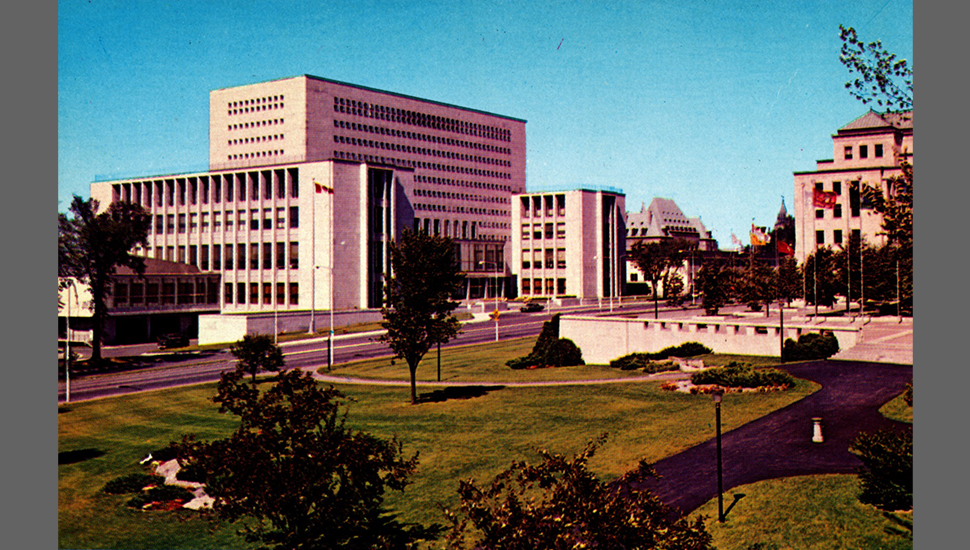
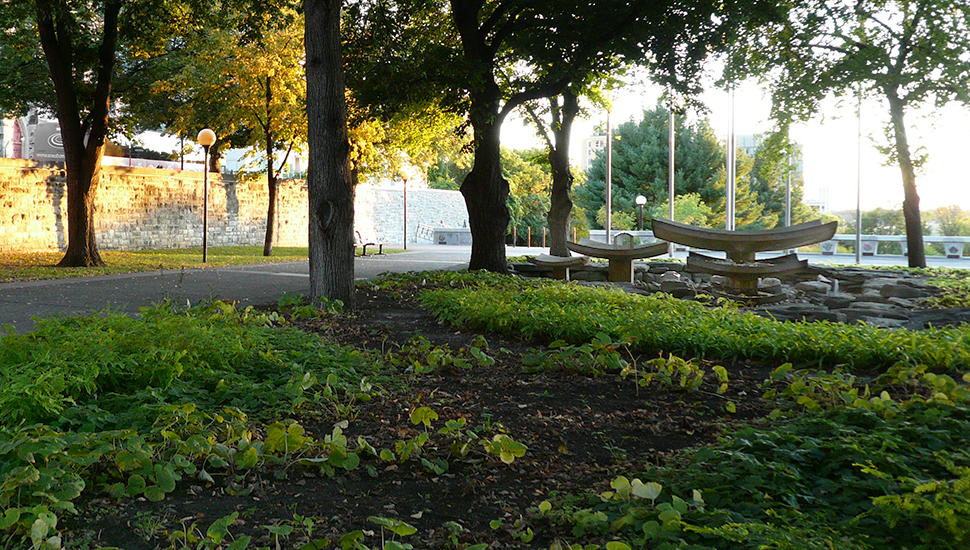
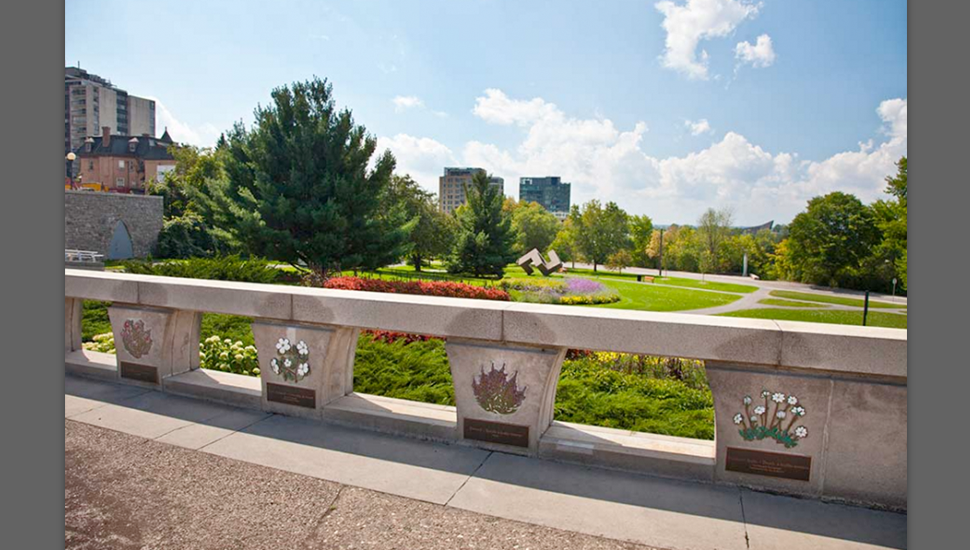
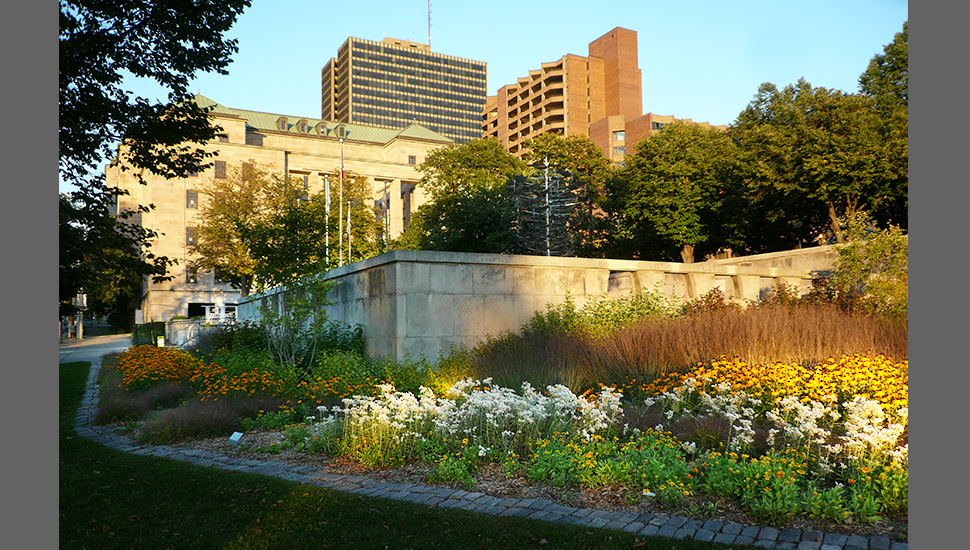
The Garden is composed of two parts: a one-acre park of formal terraces and plantings at the corner of Sparks and Bay streets, and an adjacent 4-acre park with a picturesque landscape of lawns and plantings sloping westward.
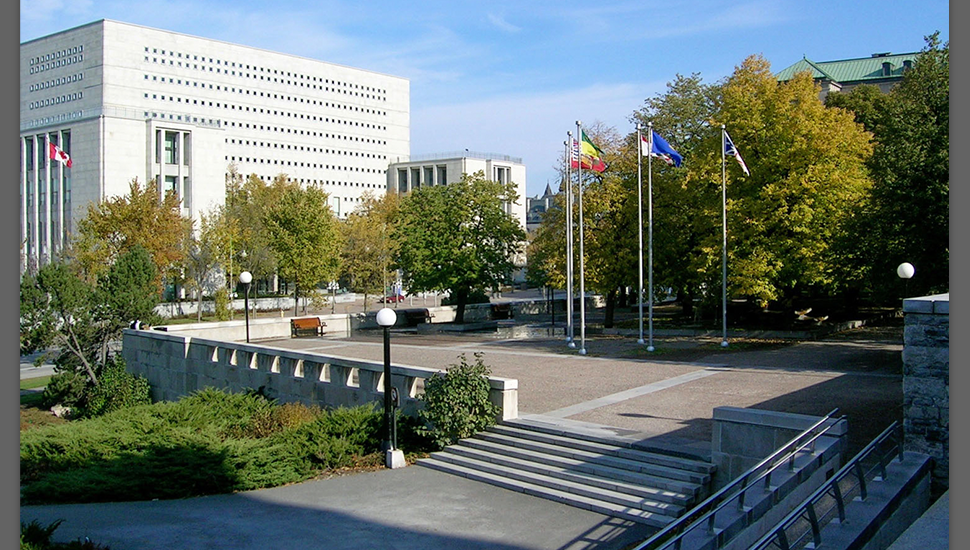
The terraces were organized so they can be viewed, approached and enjoyed from several different angles and vantage points. The large upper terrace was designed as a rigourous grid pattern of raised planting beds and trees, ans surface patterns of concrete aggregate pavers bordered by smooth finished limestone.
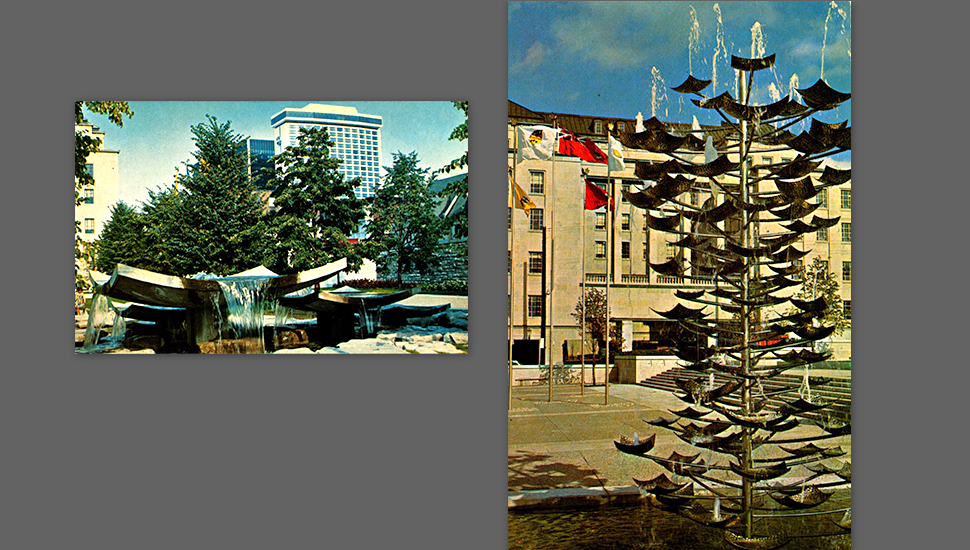
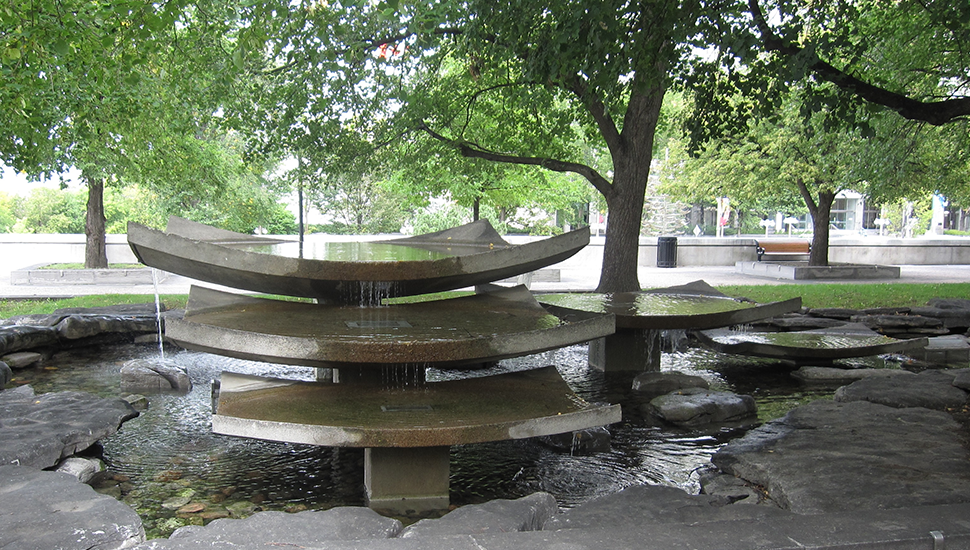
On the west side of the upper terrace is a sculptural fountain entitled Great Lakes, designed by landscape architect Emil G. Vandermeulen with consulting engineers Adjeleian and Associates.
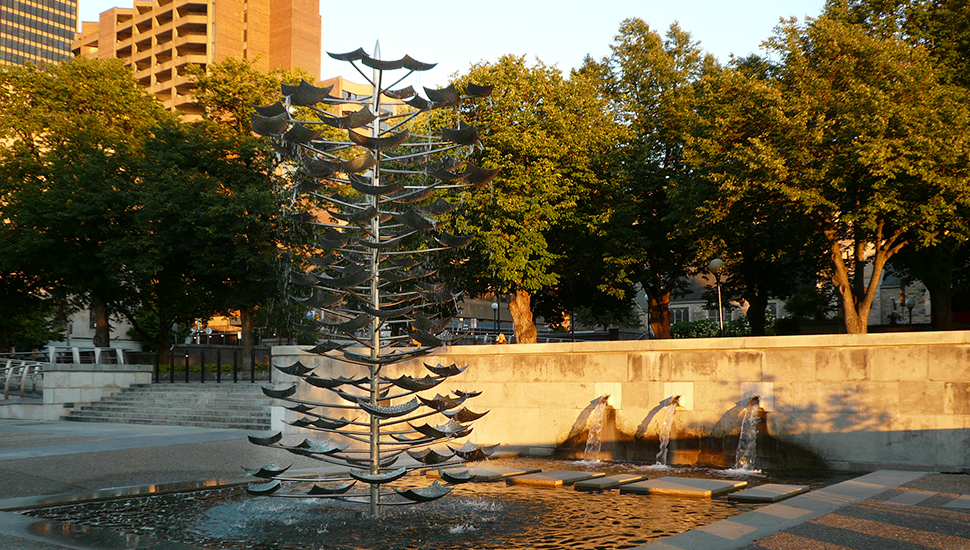
The most prominent element of the lower terrace is the stainless-steel water sculpture entitled Tree Fountain, created by Montreal sculptor Norman Slater. Spouts of water pour into a pool, flowing beneath stepping stones into a larger pool where the sculpture stands 6 metres tall as a symbol of Canada's forests.
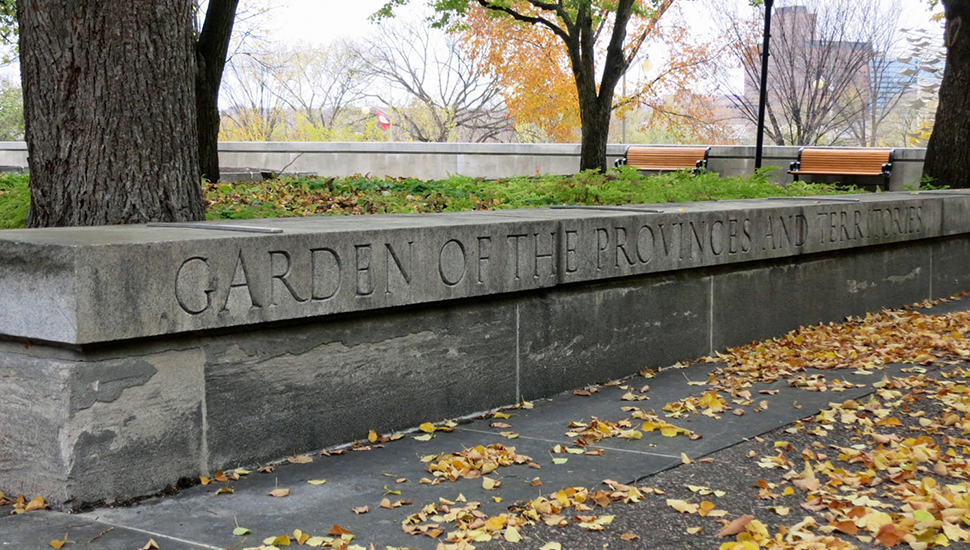
The individual provinces and territories are represented by bronze plaques and floral insets mounted to the inner face of the granite balustrades, and groupings of provincial, territorial and Canadian flags flying atop 40-foot bronze flag poles.
The threat to the Garden of the Provinces arose in May 1988 when the Government of Canada agreed to a renovation of the West Memorial Building to house an expanded National Archives. The proposed expansion would encroach upon the Garden site. Alarmed by this development plan, Heritage Ottawa helped raise awareness about its potential negative impact. Heritage Ottawa also expressed its concerns in an official letter to the Minister of Public Works and Government Services.
The controversy over the destruction of the Garden inspired a renewed interest in the site. In 2003 Robertson Martin Architects (RMA) was engaged to prepare a condition assessment of the Garden.
In April 2004, as part of the Urban Forum public lecture series, a presentation entitled Invisible Landscapes: Rediscovering the Garden of the Provinces was delivered by landscape architect Don W. Graham, architectural historian Andrew Waldron, Ivan Matrtaj and John Zvonar, a conservation landscape architect with Public Works and Government Services Canada. An additional presentation entitled Preserving Modern Heritage Landscapes – The Garden of the Provinces was delivered by John Zvonar and Louise Lalande, a partner with Lalande + Doyle Architects Inc.
These concerted voices helped create public appreciation for the deteriorating site. A decision was made to restore the Garden of the Provinces to its original condition, with updates to meet current safety and accessibility standards.
Between 2004 and 2009, RMA restored the fountains and the masonry. Lalande + Doyle Architects Inc. designed accessible ramps connecting the terraces and the street. The Coat of Arms was also updated, and the site became known as The Garden of the Provinces and Territories.
In 2015, the NCC added 10,000 plants to the site, representative of species found across Canada’s provinces and territories. The NCC has identified the rehabilitation of the Garden of the Provinces and Territories as one of its current priorities in beautifying the Capital.
The Garden of the Provinces and Territories lives on as one of Canada's most important landscape designs of the modern era.